Here is a number that should make every business owner pause: 38% of organisations are actively piloting AI agents right now. Yet only 11% have successfully deployed them in production.
That gap is not a technology problem. According to Gartner, 40% of agentic AI projects will fail by 2027 — not because the technology does not work, but because businesses are attempting to automate broken processes rather than redesigning them from the ground up.
AI agents represent the most significant shift in how businesses use software since the cloud. But like every major technology wave, the businesses that move thoughtfully will gain a decisive edge over those that move fast without a plan.
What Is an AI Agent? (The Plain-English Definition)
Before the term became a buzzword, the concept was simple: an AI agent is a software system that can perceive its environment, make decisions, and take actions to complete a goal — without needing a human to guide each step.
The clearest way to understand this is to contrast it with what came before.
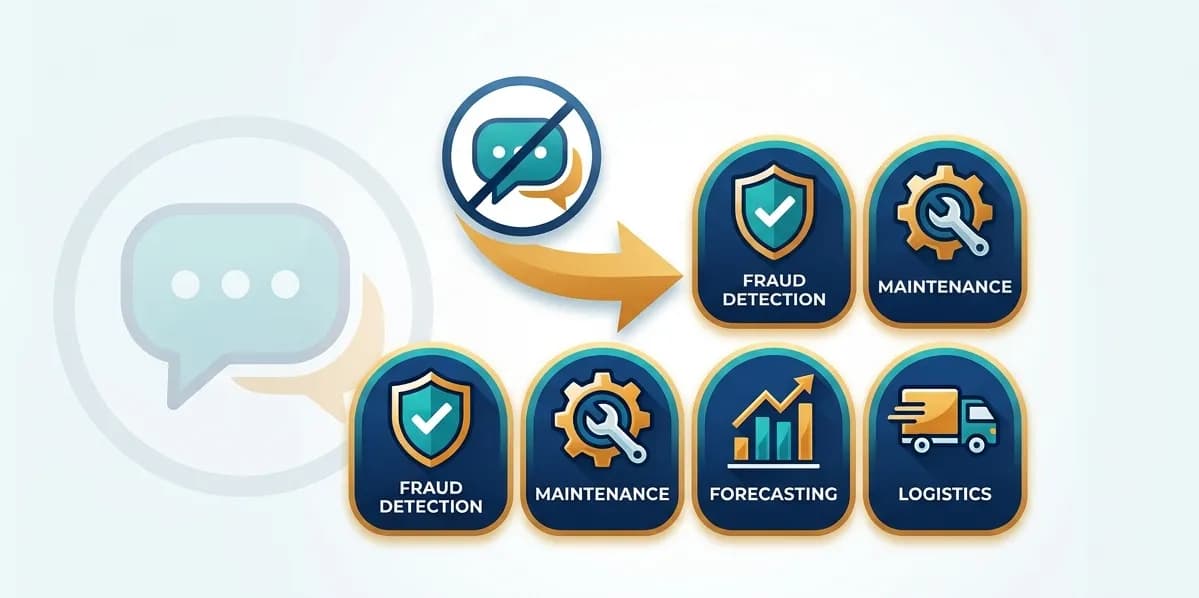
A traditional chatbot waits for a question and returns an answer. It is reactive, scripted, and contained. An AI agent, by contrast, is proactive. Given a goal — "qualify all incoming sales enquiries and book a discovery call with any lead that scores above 70" — it will independently read emails, research companies, score leads, send personalised messages, access your calendar, and log the outcome in your CRM. No human in the loop required.
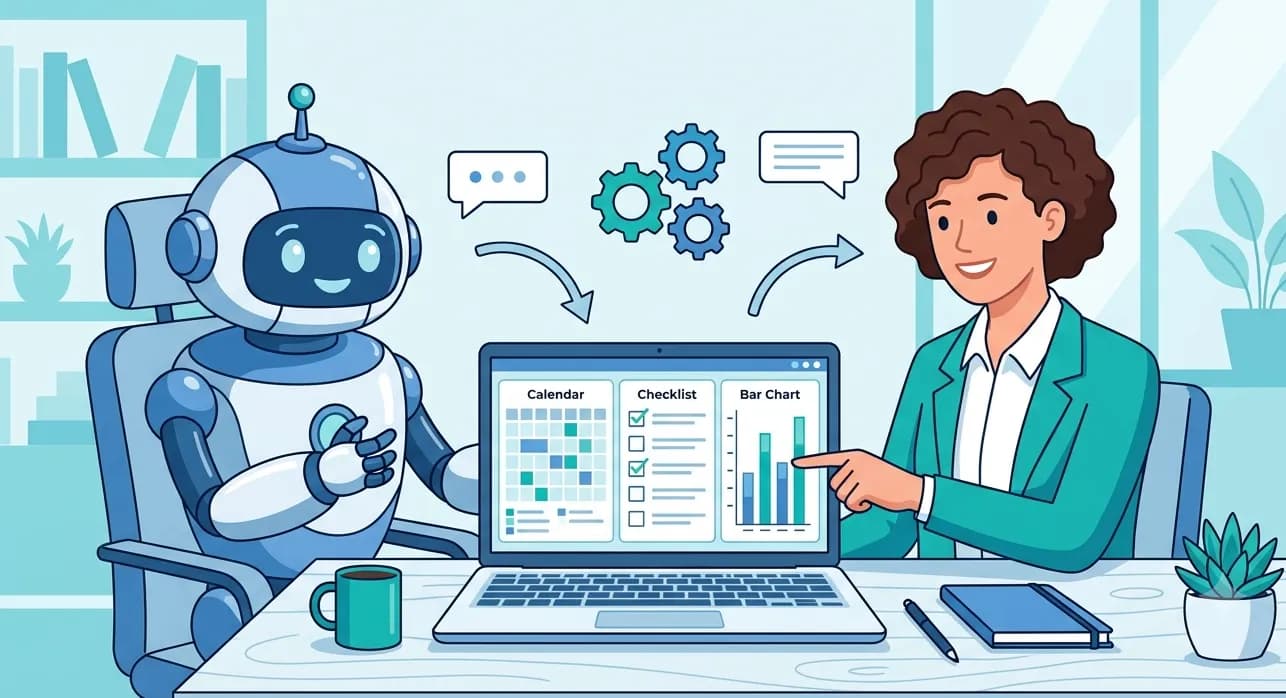
Think of it as the difference between a calculator and an employee. A calculator performs one operation when you press a button. An employee understands the goal, figures out the steps, uses multiple tools, and reports back when the job is done.
That is what AI agents do. And in 2026, they are no longer a research prototype — they are a production-ready business tool.
How AI Agents Actually Work: The 4-Step Loop
Every AI agent, regardless of complexity, operates on a continuous four-step loop. Understanding this loop helps you identify exactly where in your business an agent can and cannot add value.
1. Perceive The agent takes in information from its environment — emails, database records, API responses, user inputs, calendar data, documents, or sensor outputs. This is its context window: everything it knows about the current situation.
2. Plan Using a large language model (LLM) as its reasoning engine, the agent determines the best sequence of steps to reach the goal. It breaks the objective down into sub-tasks and selects the appropriate tools for each one.
3. Act The agent executes. It calls APIs, writes to databases, sends messages, triggers workflows, browses the web, or interacts with other software systems. The tools available to it define the scope of what it can do.
4. Learn The agent evaluates the outcome of its actions against the goal. It adjusts its approach if necessary and either completes the task or loops back to the perceive stage with new information.
This loop is what separates an AI agent from simpler automation. A traditional RPA (Robotic Process Automation) script follows a fixed path and breaks the moment something unexpected happens. An AI agent reasons around obstacles and finds an alternative route.
5 Real Business Use Cases for AI Agents in 2026
Agentic AI is not an abstract concept confined to Silicon Valley. It is already being deployed across industries to handle tasks that previously required dedicated staff.
1. Customer Support Triage and Resolution
An AI agent monitors incoming support tickets, classifies them by issue type and urgency, resolves straightforward queries autonomously using your knowledge base, escalates complex issues to the right human agent with a full summary already written, and closes the loop by following up with the customer. Support teams handling 500+ daily tickets are seeing resolution times cut by over 60%.
2. Sales Lead Qualification
When a new lead fills in a form on your website, an agent researches the company, scores the lead against your ideal customer profile, sends a personalised first response, and books a discovery call if the lead qualifies — all before your sales team reads their morning emails.
3. Invoice and Document Processing
Accounts teams no longer need to manually extract data from supplier invoices. An agent reads the document, validates figures against purchase orders, flags discrepancies, routes approvals to the right person, and updates the accounting system — handling what used to take hours in minutes.
4. Internal IT Helpdesk
When an employee raises an IT ticket, an agent diagnoses the issue, attempts an automated fix (resetting passwords, provisioning software access, clearing cache), and only escalates to a human engineer if the issue genuinely requires one. Internal IT resolution times drop dramatically without adding headcount.
5. E-Commerce Order Management
In the retail and marketplace space, agents monitor inventory levels, automatically reorder stock when thresholds are reached, update product listings based on availability, handle return requests end-to-end, and flag anomalies in order patterns that might indicate fraud — all without manual intervention.
Why 40% of AI Agent Projects Fail — and What They Get Wrong
This is the section most vendors will not tell you.
The failure rate in agentic AI projects is high — and the reason has nothing to do with the technology. Gartner's analysis is pointed on this: organisations fail when they automate a broken process rather than redesign it.
Consider a business that has a messy, inconsistent sales follow-up process. Reps use different email templates, log data in different formats, and follow up at unpredictable intervals. Deploying an AI agent on top of that process does not fix it — it scales the chaos. The agent will follow the same inconsistent patterns, but faster and at volume.
The businesses succeeding with AI agents in 2026 share one common trait: they redesigned the process first, then automated it.
The HPE approach — which Deloitte cited in their 2026 Tech Trends report — captures it well: "We wanted to select an end-to-end process where we could truly transform, not just solve for a single pain point."
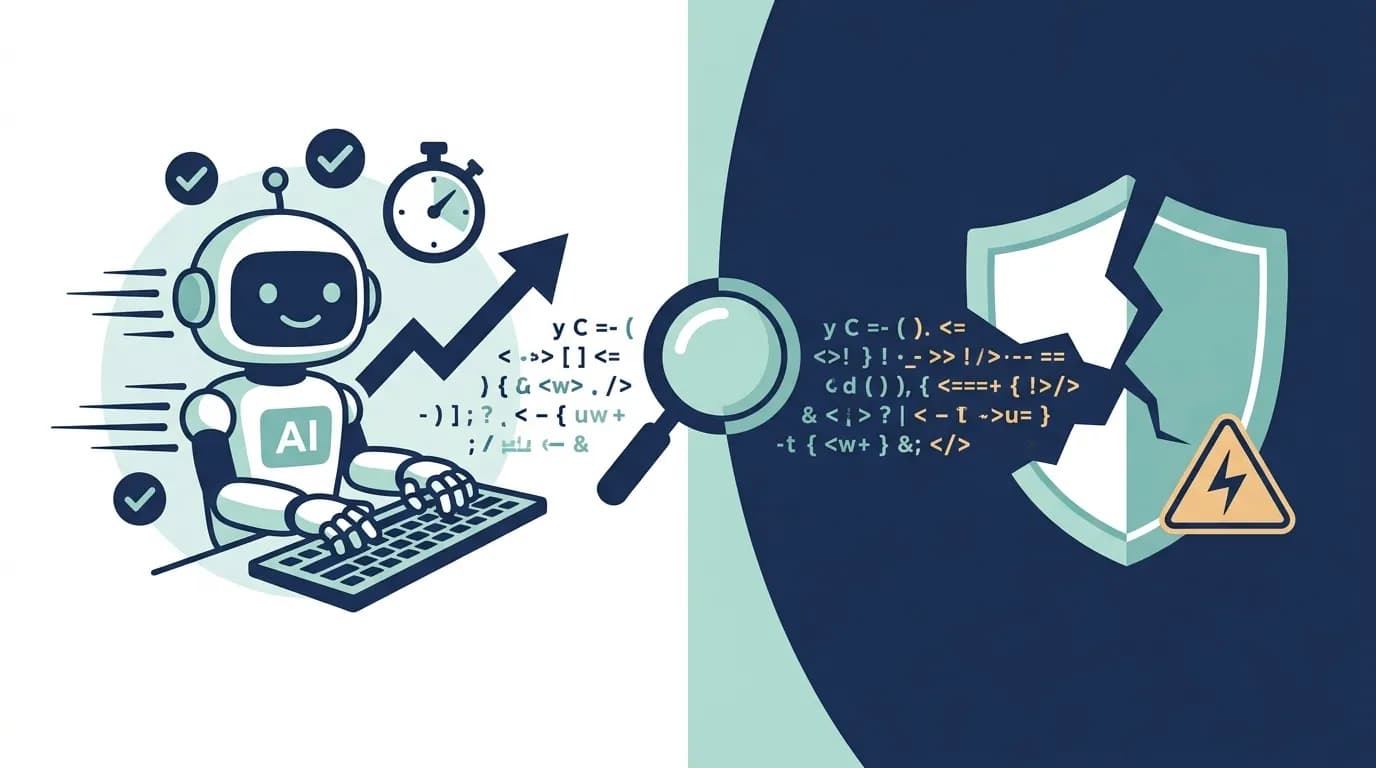
The second most common failure point is governance. Who owns the agent's output? What happens when it makes a wrong decision? Without clear ownership and a human review layer for high-stakes actions, AI agents can cause more damage than they prevent.
The rule is simple: clean inputs, clear process, defined guardrails. Everything else follows.
Single Agents vs Multi-Agent Systems: Which Does Your Business Need?
Not every use case requires the same architecture. Here is a practical distinction:
Single Agent One agent, one domain, one goal. Ideal for a focused, well-defined task like lead qualification, invoice processing, or IT triage. Lower complexity, faster to deploy, easier to monitor. The right starting point for most businesses.
Multi-Agent System Multiple specialised agents working in coordination, each handling a different sub-task and passing outputs to the next agent. Think of it as a software team rather than a single software employee. Used for complex, multi-stage workflows — for example, a content pipeline where one agent researches, a second writes, a third edits, and a fourth schedules and publishes.
A simple decision framework:
- Can the goal be completed by one system with access to the right tools? → Single agent.
- Does the goal require parallel workstreams or highly specialised reasoning in different domains? → Multi-agent.
- Are you deploying for the first time? → Always start with a single agent. Complexity can be added once the foundation is solid.
The 5 Questions to Ask Before Building an AI Agent
Before any development begins, every business leader should be able to answer these five questions. If any answer is unclear, that is the work to do first.
1. Is the process well-defined? Can you write down every step, every decision point, and every expected output? If a human struggles to explain exactly how the task is done, an AI agent will struggle to do it reliably. Document the process first.
2. Is it repetitive and rule-based at its core? Agents deliver the most value on tasks that happen frequently and follow predictable patterns. If every instance of a task is genuinely unique and requires creative judgment, a human remains the better option.
3. What does a mistake cost? In a low-stakes task like draft email generation, errors are low risk and easily corrected. In a high-stakes task like financial reporting or medical record updates, errors have serious consequences. Your governance framework needs to match the risk profile of the task.
4. Who owns the output? Accountability cannot belong to the agent. Someone in your organisation must be named as responsible for reviewing, approving, and being accountable for what the agent produces. This is non-negotiable.
5. Do you have the data infrastructure to support it? An AI agent is only as reliable as the data it reads and the systems it writes to. Inconsistent data formats, siloed databases, and poorly documented APIs are the fastest way to an expensive failure. Audit your data readiness before your agent readiness.
How to Get Started: Build vs Buy vs Hire
Once you have answered the five questions above, you have three realistic paths forward.
Build Custom
You work with a development partner to design, build, and deploy an AI agent tailored to your specific process, data environment, and existing systems. This is the highest-effort path but delivers the best fit, the most control, and no recurring per-seat licensing fees. It is the right choice for businesses with complex workflows, proprietary data, or competitive processes they do not want to standardise on off-the-shelf tools.
Buy Off-the-Shelf
Platforms like Zapier AI, Make (formerly Integromat), Microsoft Copilot Studio, and a growing number of vertical-specific tools offer pre-built agentic workflows you can configure without writing code. Faster to deploy, lower upfront cost, but limited customisation. Works well for standard use cases where your process matches the template.
Hire a Specialist Team
For businesses that want to move quickly and do not have in-house AI expertise, engaging a development company that specialises in AI agent architecture is often the fastest route to a production-ready deployment. The key differentiator to look for is whether the team has experience integrating agents with your specific stack — not just building the agent itself.
The Bottom Line
AI agents are not the future of business software. They are the present — and the gap between companies that have deployed them effectively and those still experimenting is widening every quarter.
The technology is ready. The question is whether your processes, data, and governance frameworks are ready alongside it.
Start with one process. Define it clearly. Build the agent to match the process, not the other way around. Measure the output. Then scale.
The businesses that will win in the next 18 months are not the ones who moved first — they are the ones who moved correctly.
Frequently Asked Questions
What is the difference between an AI agent and a chatbot? A chatbot responds to direct questions within a single session. An AI agent operates autonomously across multiple systems and tools to complete a multi-step goal — often without any user interaction after the initial instruction.
How much does it cost to build an AI agent? Costs vary significantly depending on the complexity of the task, the number of integrations required, and whether you are building custom or configuring a platform. A focused single-agent deployment with two to three integrations typically takes four to eight weeks to build properly.
Do I need an AI strategy before building an agent? Not necessarily a full strategy, but you do need a clearly defined process, clean data, and an owner for the agent's output. Those three things matter more than any high-level strategy document.
Is agentic AI safe for business use? With proper governance, yes. The risks — incorrect outputs, data exposure, runaway automation — are real but manageable. Every agent deployment should include a human review layer for high-stakes decisions and clear escalation paths for edge cases.
Elite Web Technologies builds custom AI agents and intelligent automation systems for businesses across e-commerce, SaaS, healthcare, logistics, and enterprise. If you are evaluating where AI agents can add value in your operations, book a free 30-minute AI Readiness Consultation — no commitment, no pitch, just a clear assessment of where you stand and where to start.