A Zyppy SEO study analyzing over 23 million internal links found something surprising: pages with 45-50 internal links saw meaningful organic traffic gains — but push past that, and the benefit reverses. Meanwhile, research suggests roughly 40% of internal link value on the average website is wasted, buried on orphaned pages nobody links to and search engines barely find.
Most small businesses spend their SEO budget chasing backlinks, publishing new blog posts, and tweaking meta descriptions — while the pages already sitting on their website go quietly unlinked, uncrawled, and invisible. Internal linking isn't glamorous. It's also one of the highest-leverage, lowest-cost fixes most small sites are getting wrong.
What Internal Linking Actually Does
Internal links are simply the links connecting one page on your website to another. They might sound like a minor detail, but they do three jobs at once:
- They help search engines discover and understand your content. Crawlers use internal links to find new pages and figure out how topics on your site relate to each other.
- They distribute authority across your site. A well-linked page can pass some of its ranking strength to other important pages — pages buried with no links pointing to them largely miss out.
- They guide real visitors toward what matters. A logical link structure keeps people engaged longer and moves them toward the pages that actually drive business — contact forms, service pages, and case studies.
Why This Matters Even More in 2026
Internal linking used to be a classic Google-ranking factor. Now it's doing double duty.
- AI search tools favor sites that are easy to traverse. Search Everywhere Optimization (SEO) and Answer Engine Optimization (AEO) increasingly reward sites with clear hubs, descriptive links, and predictable paths between related content — the same structure that helps AI systems cite you accurately.
- Google's Helpful Content approach has shifted focus toward genuine topical expertise, not manipulative optimization — and a well-organized internal link structure is exactly how you demonstrate that expertise across a full topic, not just one page.
- Every major ranking improvement in recent years has come from restructuring internal linking, not simply publishing more content or chasing more backlinks.
The Mistakes Most Small Sites Make
- Orphan pages — pages with no internal links pointing to them at all, making them nearly invisible to both crawlers and visitors
- "Link everything everywhere" habits — scattering links inconsistently instead of following a deliberate structure, which dilutes authority instead of directing it
- Burying priority pages too deep — service pages or contact pages that take five or six clicks to reach from the homepage, when three or fewer is the standard to aim for
- Generic anchor text — using "click here" or "read more" instead of descriptive text that tells both users and search engines what the linked page is actually about
- Overloading pages with links — cramming in far more links than the content can naturally support, which can dilute the value each one carries
What Good Internal Linking Actually Looks Like
- Keep priority pages close to the homepage. Ideally, your most important pages — services, contact, key offers — should be reachable within three clicks.
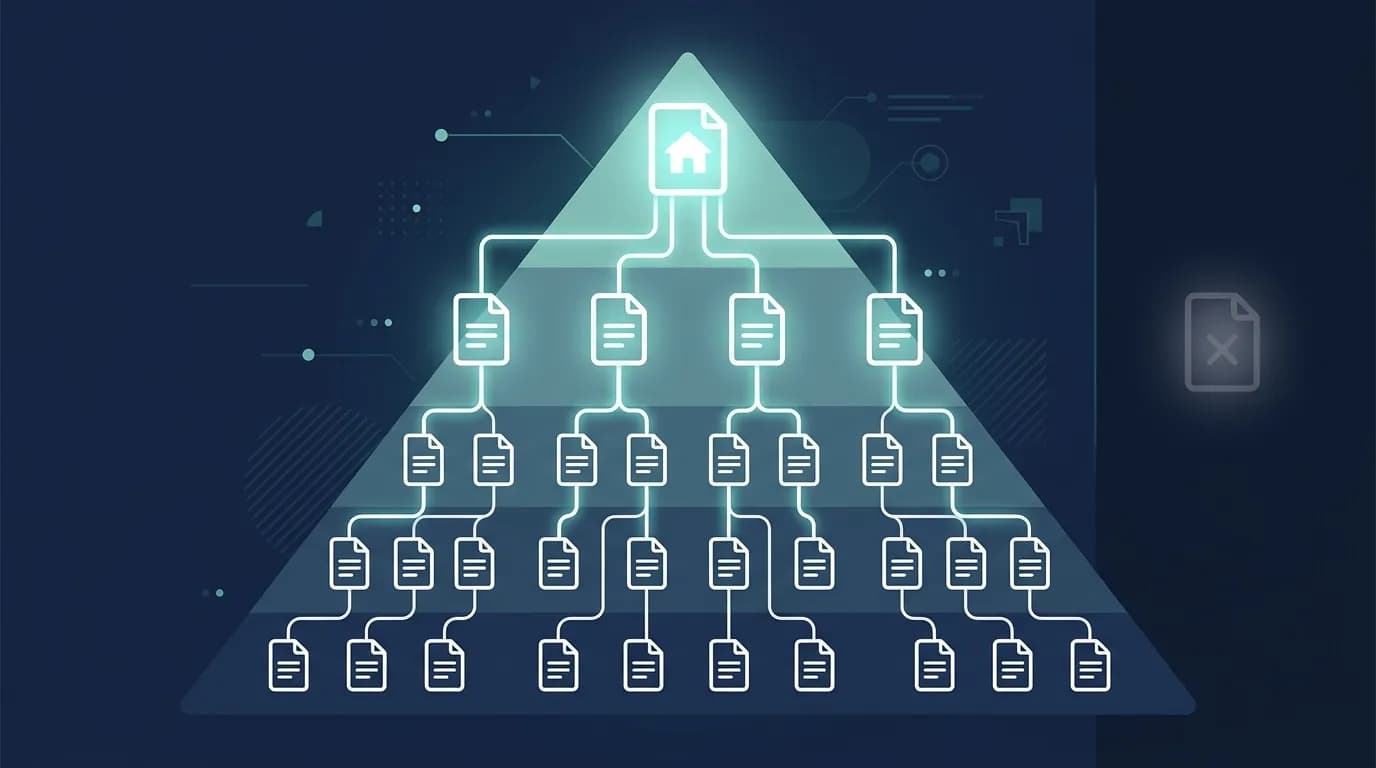
- Build pillar pages and topic clusters. A central, comprehensive page on a core topic, linked out to more specific supporting pages, creates a structure search engines and AI tools can both understand and trust.
- Use descriptive, natural anchor text. Instead of "learn more," link the words that actually describe the destination — it helps rankings and gives visitors a clearer sense of where they're headed.
- Aim for a reasonable link density. Most guidance suggests roughly 2-10 contextual internal links per 1,000-2,000 words, scaling with content length — enough to guide the reader, not so many it feels like a directory.
- Audit regularly. Broken links, orphaned pages, and outdated redirects accumulate quietly over time — a periodic internal link audit catches what's easy to miss day-to-day.
Worth Noting: Think of internal links less like a checklist item and more like your site's circulatory system — they route authority, attention, and trust to the pages that matter most. A site with strong external authority but poor internal linking is still leaving real ranking potential on the table.
A Practical Example
Say your business offers both web development and SEO services, alongside a blog covering both topics. A blog post about SEO trends is a natural opportunity to link directly to your Technical SEO services page — connecting a reader's interest in the topic to the actual service that solves it, while telling search engines that page is a meaningful destination tied to that subject. Do this consistently across your blog, and you're not just helping one article rank — you're building topical authority across your entire site.
The Bottom Line
Backlinks and fresh content still matter — but internal linking is the free, already-available lever most small sites leave unused. Fixing it doesn't require new content or a bigger budget; it requires a deliberate structure connecting the pages you already have. For a growing business, that's often the fastest, cheapest SEO win available.
At Elite Web Technologies, our Technical SEO service includes a full internal linking and site architecture audit as part of building a stronger, more discoverable website. You can also see examples of how we've structured client platforms in our portfolio.
Want to know how much ranking potential your site is leaving on the table?Contact Elite Web Technologies for a free internal linking audit.