Nearly two-thirds of enterprises have already experimented with AI agents. Fewer than 10% have actually managed to scale them. When McKinsey asked why, the answer wasn't "the AI isn't smart enough." Eight in ten companies pointed to the same root cause: their data.
That's the uncomfortable truth most businesses are only now discovering. The agents aren't the problem. The data underneath them is. And the fix isn't a smarter model — it's the infrastructure connecting that model to the business itself, something the industry now calls a data fabric.
The Real Bottleneck Isn't the AI — It's What Feeds It
Every AI agent making a real business decision — routing a customer complaint, flagging a fraudulent transaction, summarizing a case file — needs data that's accurate, current, and understood in context. Not just accessible. Understood.
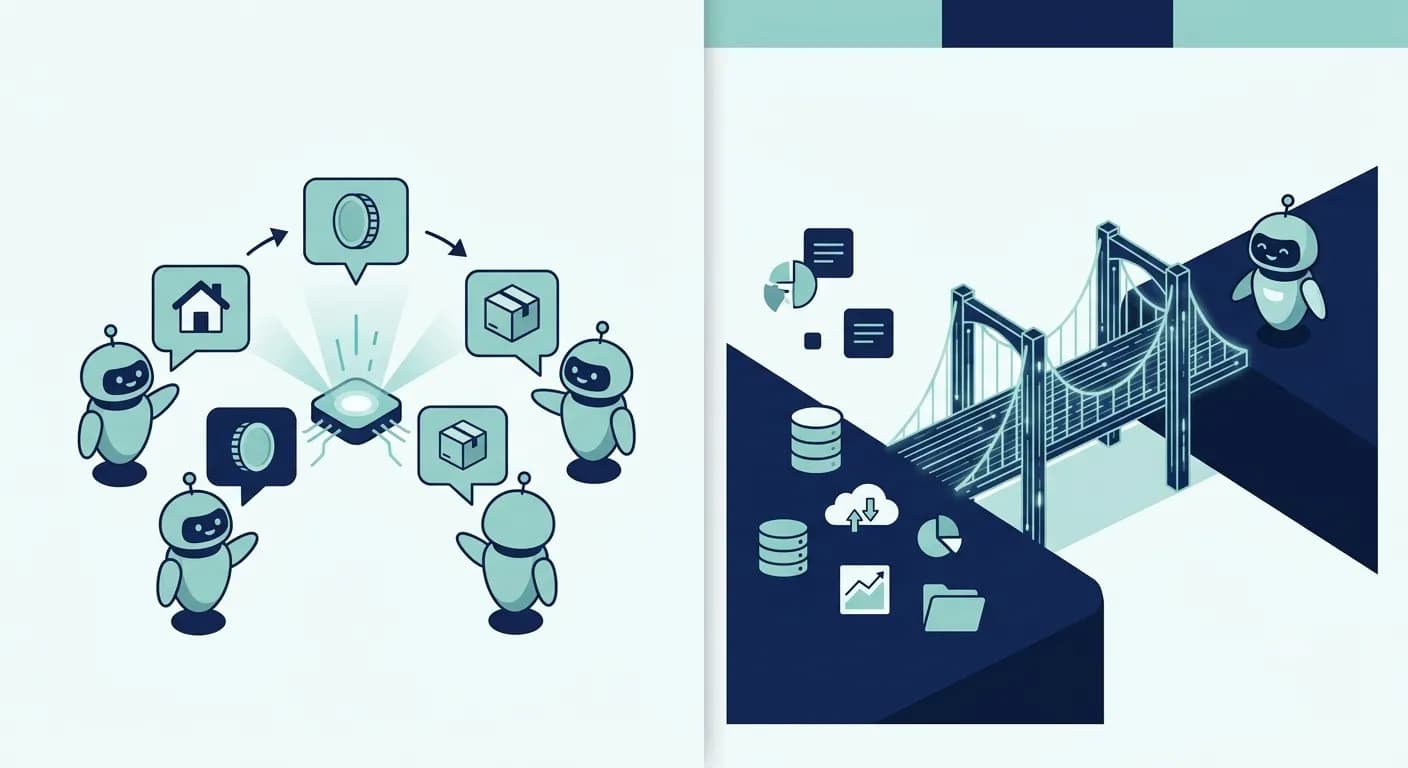
Here's the problem most companies run into: an agent might pull "customer" data from the CRM, "revenue" data from the finance system, and "region" data from a completely different platform — and each system might define those terms slightly differently. The agent doesn't fail because it's a bad model. It fails because it's working from a fragmented, contradictory picture of the business. Multi-agent systems make this worse: when agents built on different platforms carry different definitions of basic business concepts, decisions across the system start to break down.
What Is a Data Fabric, and Why Does It Matter Now?
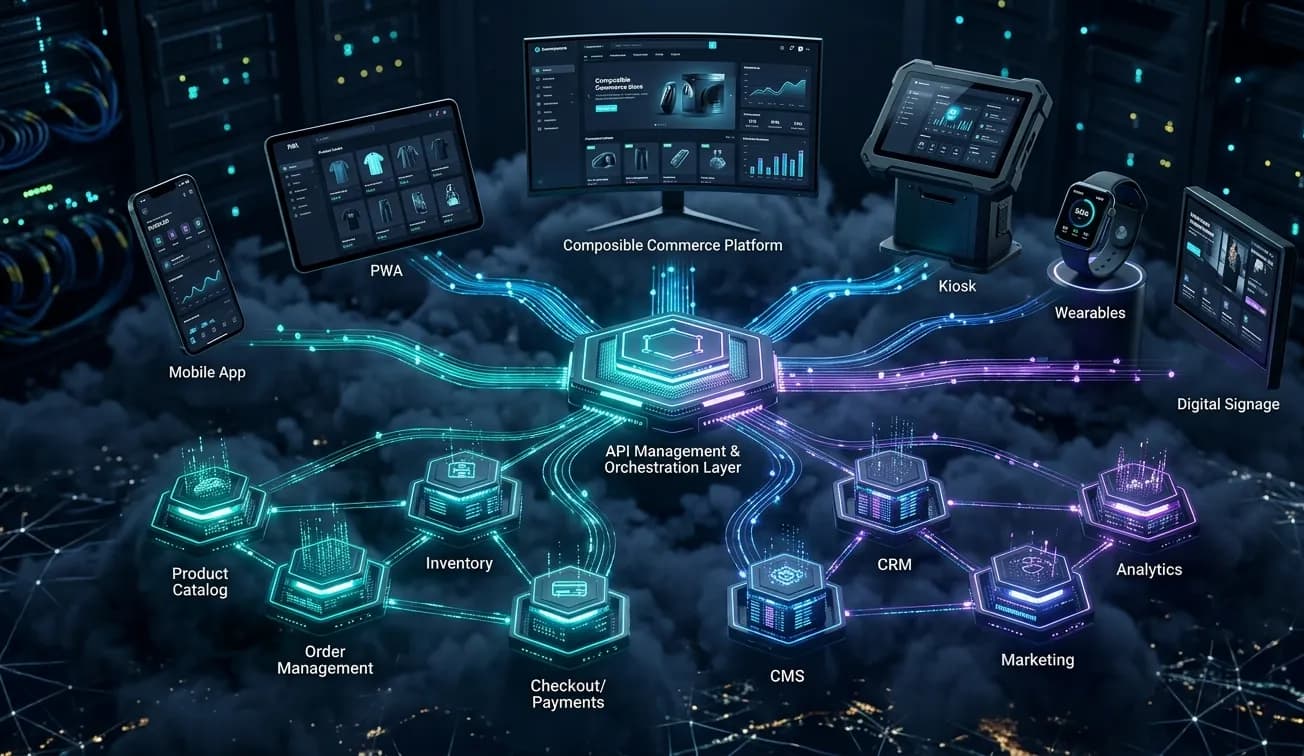
A data fabric is an infrastructure layer that connects an organization's data — across databases, cloud systems, warehouses, and applications — while applying consistent governance, business context, and access rules. Instead of copying data into one central location (which quickly goes stale), a data fabric creates live connections, so systems always pull current, accurate information straight from the source.
For AI agents specifically, the data fabric becomes something more: the primary interface an agent uses to understand the business, instead of guessing at raw, disconnected storage systems.
- Traditional integration copies data — creating delays and stale information. A data fabric connects to it directly, keeping results current.
- Traditional integration requires heavy, ongoing pipeline maintenance. A data fabric reduces that overhead through automation and federation.
- Traditional systems force agents to start from zero every time, guessing at business meaning. A data fabric gives agents shared, consistent context to work from.
Real Results Businesses Are Already Seeing
This isn't theoretical — companies putting the right data infrastructure in place are seeing measurable gains:
- LinkedIn's knowledge-graph-backed system cut support ticket resolution time from 40 hours to 15 hours — a 63% improvement — by giving support agents an AI assistant that retrieves precise, current answers instead of relying on the model's memorized guesses.
- A banking customer using a modern data-fabric platform reported over 80% better incident detection, and a global insurer saw incident reporting speed improve by 95%.
- The global data fabric market is projected to grow from roughly $3.2 billion to nearly $4.9 billion this year alone, driven directly by enterprise AI adoption and increasingly complex, multi-cloud environments.
The pattern across every example is the same: the AI didn't get smarter. The data it could actually see and trust did.
Why Major Tech Platforms Are Racing to Fix This
This problem has become urgent enough that the biggest names in enterprise tech are rebuilding entire product lines around it.
- Microsoft has made the case explicitly this year: the hardest part of enterprise AI is no longer the model — it's giving agents shared organizational context, so they don't each carry a different interpretation of what a "customer" or an "order" actually means.
- New platform features are emerging specifically to let AI agents author, operate, and diagnose data workflows directly, rather than depending on a separate data team as a bottleneck.
- Industry analysts now frame data fabric and data mesh not as competing philosophies, but as complementary approaches — because enterprises need both flexible governance and reliable structure to make agentic AI actually trustworthy at scale.
- Even AI-assisted coding platforms are integrating directly with these systems, so applications and their underlying data infrastructure are unified from day one instead of stitched together after the fact.
Worth Noting: As enterprises move AI agents from pilot projects into real production use, data fabric approaches are increasingly built to work alongside existing data lakes, lakehouses, and pipelines — not replace them. That matters for businesses on tighter budgets who want to build AI-ready infrastructure without ripping out what already works.
What This Means for Your Business
- Don't evaluate AI agents in isolation. An impressive agent demo means little if it can't reliably access accurate, current business data once deployed.
- Audit where your data actually lives — and whether it agrees with itself. Fragmented, inconsistent definitions across systems are the single biggest reason agent projects stall before they scale.
- Prioritize context and governance, not just access. Agents need to understand what your data means, not just be able to technically reach it.
- Treat data infrastructure as a prerequisite, not an afterthought. The businesses successfully scaling AI agents invested in their data foundation before — not after — deploying agents widely.
- You don't need to rebuild everything. Modern data fabric approaches are designed to connect to what you already have, making this a realistic investment even for leaner teams.
The Bottom Line
The AI model your agents run on matters far less than what they're allowed to see, trust, and understand about your business. Enterprises scaling AI successfully in 2026 aren't the ones with the flashiest models — they're the ones that solved the boring, foundational problem first: giving their agents a single, trustworthy, well-governed picture of how the business actually works.
At Elite Web Technologies, we help businesses build the data infrastructure their AI initiatives actually depend on — so agents work with reliable context from day one, not guesswork.
Want to know if your data infrastructure is ready for AI agents at scale?Contact Elite Web Technologies for an infrastructure review.