The Latest in Technology Solutions for Business Growth
In today's rapidly evolving digital landscape, staying competitive means more than just having an online presence. It demands a strategic approach to leveraging cutting-edge technology solutions for business growth. For business owners, founders, and decision-makers, understanding these advancements and how they translate into tangible benefits is no longer optional—it's essential for sustained success and market leadership.
This article explores the latest in technology solutions, focusing on how recent innovations in custom software development, scalable web applications, and modern software architecture directly contribute to improved efficiency, enhanced customer experience, and crucial market agility. We'll delve into the 'what' and the 'why,' providing practical examples to illustrate their real-world impact and guide your strategic technology investments.
Why Strategic Technology Solutions for Business Matters Now
The pace of digital transformation is accelerating, driven by evolving customer expectations, intense market competition, and the constant emergence of new capabilities. Businesses that embrace forward-thinking technology solutions are better positioned to thrive, not just survive:
- Innovate Faster: By adopting agile development practices and modular architectures, businesses can quickly adapt to market changes, test new ideas, and introduce new products or services with unprecedented speed. This directly contributes to market agility.
- Optimize Operations: Automation, intelligent workflows, and integrated systems lead to significantly improved efficiency. Manual tasks are reduced, errors are minimized, and operational costs are streamlined, freeing up resources for strategic initiatives.
- Deepen Customer Relationships: Personalized experiences, responsive services, and intuitive digital touchpoints are powered by modern technology. This leads to an enhanced customer experience, fostering loyalty and driving repeat business.
- Gain Competitive Advantage: Leveraging unique capabilities, proprietary data insights, and superior digital experiences allows businesses to differentiate themselves effectively in a crowded marketplace.
Ignoring these shifts risks stagnation and falling behind competitors. Strategic technology adoption is not merely a cost; it's a cornerstone of any robust growth strategy, offering a clear path to sustainable success.
Starting Point: What Businesses Should Evaluate First
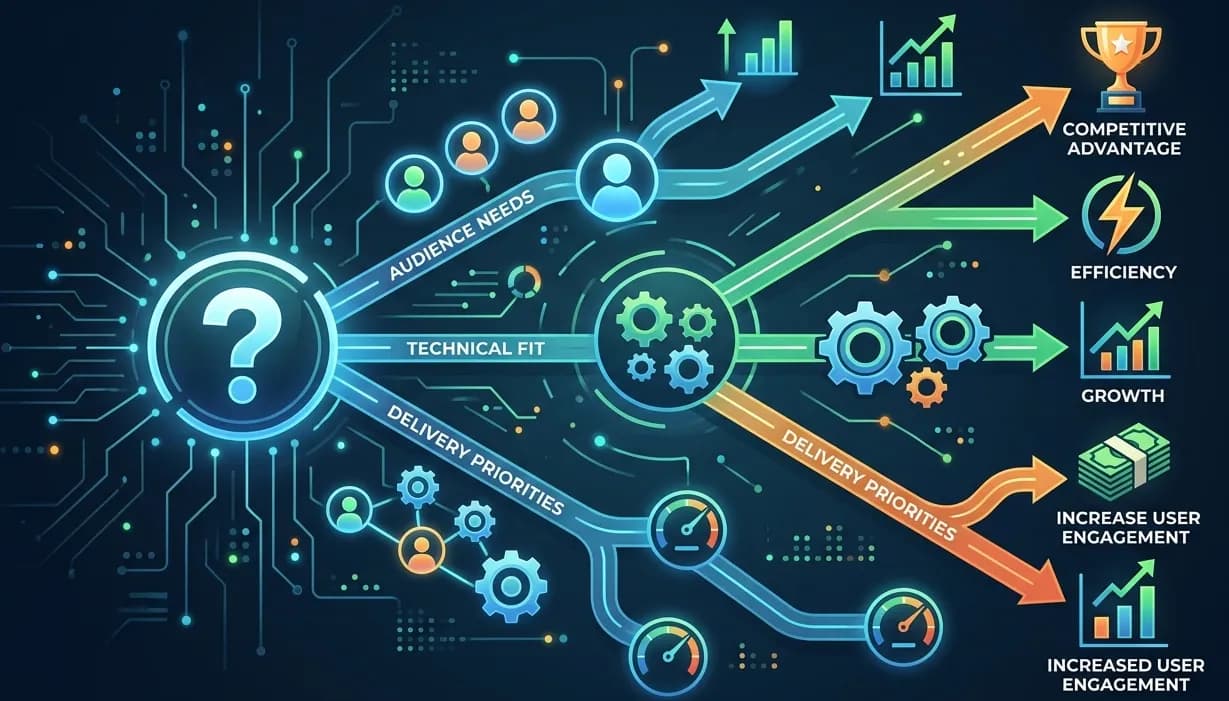
Before diving into specific technologies, it's vital to start with your core business objectives. The most effective technology solutions for business are those that directly address your unique challenges and opportunities. Here’s what to evaluate to ensure your technology investments yield clear, quantifiable returns:
- Identify Core Business Goals: What are you truly trying to achieve? Is it to increase sales by 20%, reduce operational costs by 15%, enter new geographic markets, or improve customer retention rates? Clearly defined goals provide the compass for your technology strategy.
- Pinpoint Pain Points and Inefficiencies: Where are your current bottlenecks? Are there repetitive manual tasks, gaps in your customer service process, or limitations in your existing systems that hinder growth? Understanding these challenges helps prioritize solutions that deliver immediate impact and improved efficiency.
- Assess Current Infrastructure and Capabilities: What technology do you currently use? What are its strengths, weaknesses, and integration capabilities? Understanding your starting point is key to planning a scalable, secure, and integrated solution that complements, rather than complicates, your existing ecosystem.
By grounding your technology decisions in these fundamental business considerations, you ensure that every investment is strategic and aligned with your broader vision.
Key Areas of Innovation: Practical Technology Solutions for Growth
Modern technology offers a powerful toolkit for businesses ready to transform. Here’s a look at key areas, explaining the 'what' and the 'why' with practical examples of their application:
Custom Software Development: Tailored for Unique Needs
What it is: Custom software development involves creating bespoke applications designed specifically to meet your business's unique requirements, workflows, and challenges. Unlike off-the-shelf solutions, custom software is built from the ground up to fit your exact specifications, whether it's an internal management system, a specialized customer portal, or a unique data analytics tool.
Why it matters: This approach allows businesses to gain a distinct competitive edge by automating proprietary processes, integrating disparate systems, and developing functionalities not available in generic products. The result is often significantly improved efficiency, as workflows are optimized precisely for your operations, eliminating manual workarounds and data silos. Custom software also provides unparalleled market agility, allowing you to adapt quickly to new business models or market demands without being constrained by vendor roadmaps.
Practical examples of: Imagine a logistics company needing a specialized route optimization system that accounts for unique vehicle types and delivery constraints. Or a healthcare provider requiring a secure patient portal with custom features for appointment scheduling, telemedicine integration, and secure document exchange. These are areas where custom software excels, offering solutions tailored to specific challenges and fostering greater operational control.
Scalable Web Applications: Reaching and Engaging Your Audience
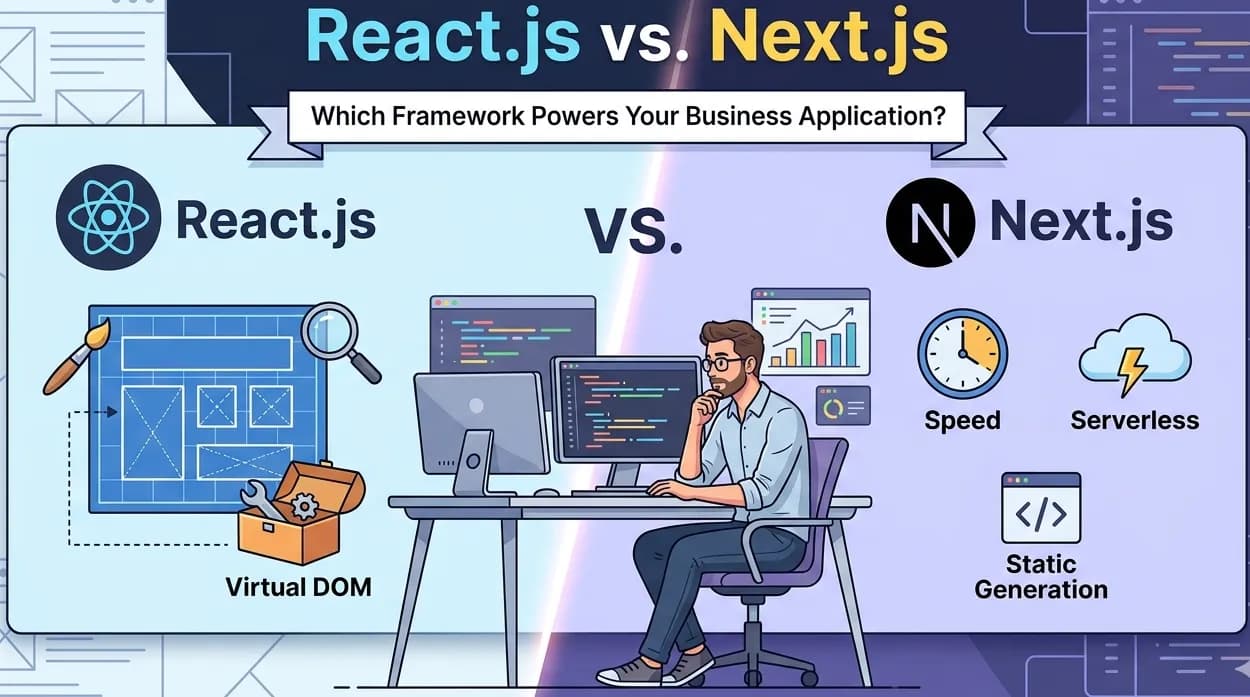
What it is: Scalable web applications are powerful, browser-based software solutions designed to handle a growing number of users and increasing data loads without compromising performance. Built with modern software architecture, they leverage technologies like React JS, Next JS, and robust backends (e.g., using PHP/Laravel Development) to deliver dynamic, responsive, and interactive user experiences across all devices.
Why it matters: In an increasingly digital world, your web application is often the primary touchpoint for customers, partners, and employees. Scalability ensures that your application can grow with your business, handling traffic spikes and expanding feature sets seamlessly. By focusing on intuitive design and fast performance, these applications significantly contribute to an enhanced customer experience, driving engagement and satisfaction. They also offer improved efficiency for internal processes by centralizing data and providing accessible tools.
Practical examples of: A SaaS platform offering a subscription service that needs to serve thousands of concurrent users with personalized dashboards. An online learning portal providing interactive courses and managing user progress. Or an internal project management tool that integrates with various departments, allowing for real-time collaboration and reporting.
Modern E-commerce Solutions: Expanding Your Digital Storefront
What it is: Modern e-commerce solutions encompass the development of robust online stores, from highly customized platforms built from the ground up to sophisticated implementations of leading open-source systems. These solutions focus on seamless user journeys, secure transactions, and powerful backend management.
Why it matters: For many businesses, an e-commerce platform is the primary revenue driver and a critical channel for customer interaction. A well-designed solution offers global reach, 24/7 availability, and the ability to scale product offerings. It directly contributes to an enhanced customer experience through personalized shopping, intuitive navigation, and efficient checkout processes. Furthermore, integrated inventory and order management features lead to improved efficiency in operations.
Practical examples of: A brand launching a unique product line requiring a Custom E-Commerce Development platform with specific subscription models or augmented reality features. A growing small business leveraging WooCommerce Development to extend their WordPress site with powerful, flexible e-commerce capabilities, integrating with their existing content and marketing efforts.
SaaS Integration & Customization: Unifying Your Digital Ecosystem
What it is: This involves strategically leveraging existing Software as a Service (SaaS) platforms (e.g., Salesforce, HubSpot, Shopify, Zoho) and integrating them with your other systems, or customizing them to fit your unique workflows.
Final Thoughts
The Latest in Technology Solutions for Business Growth should be evaluated as a practical business decision, not just a technical trend. For teams exploring technology solutions & engineering, the strongest next step is to clarify the goal, review the right implementation path, and choose a solution that can support long-term growth.
If this topic connects with your current business priorities, the next step is to review the right implementation path with a practical delivery team.