
The Essential Guide to Website Security Hardening: Beyond the SSL Certificate

Website security is no longer optional — it’s a business necessity. In an age where cyber threats are growing smarter, even small vulnerabilities can open the door to massive data breaches, financial losses, or reputation damage. Yet, many businesses stop at installing an SSL certificate and assume their website is “secure enough.” The truth? That’s just the first step.
Why React Isn’t Going Anywhere: Mastering the Modern Front-End Framework

In the ever-evolving world of web development, frameworks come and go — but React has not just survived, it has thrived. Introduced by Facebook in 2013, React has grown into one of the most powerful and widely adopted JavaScript libraries for building user interfaces. Over the past decade, while several frameworks have entered the scene, React continues to dominate front-end development across startups, enterprises, and even global tech giants.
This isn’t just by chance. React’s success lies in its adaptability, robust ecosystem, and strong developer community. With new features like Hooks, Concurrent Rendering, and the evolving React Server Components, the framework keeps modernizing without losing its core simplicity.
In this blog, we’ll explore why React is here to stay, how it keeps pace with the changing tech landscape, and why mastering it remains one of the smartest moves for front-end developers and digital agencies like Elite Web Technologies.
Preparing Your Website for the AI Era: A Guide to Generative Search Optimization (GSO/AEO)

The search landscape is changing faster than ever. Google’s new Search Generative Experience (SGE) has ushered in the era of AI-powered search, where answers are generated instead of listed. Traditional SEO is no longer enough. Businesses must now think about how to appear in AI-generated summaries and conversational search results.
This shift marks the rise of two new concepts — Generative Search Optimization (GSO) and Answer Engine Optimization (AEO). These are the next frontiers of digital visibility. In this guide, we’ll break down what SGE, GSO, and AEO mean, why they matter, and how you can prepare your website to thrive in this AI-driven future.
The Need for Speed: Mastering Core Web Vitals to Boost SEO and User Satisfaction
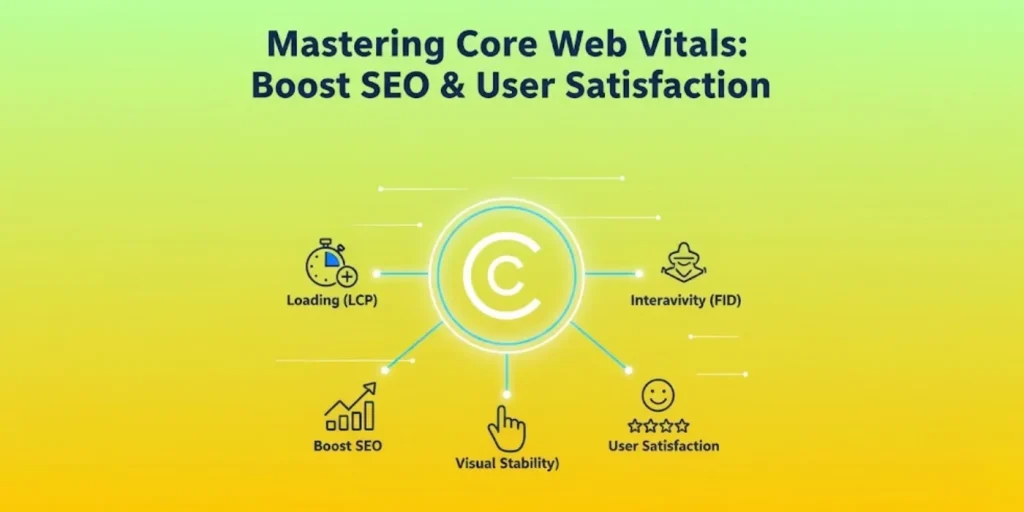
In the fast-paced world of digital business, every second counts. Studies show that users abandon websites that take more than a few seconds to load. For brands competing online, speed is no longer a luxury—it’s a necessity. That’s where Google’s Core Web Vitals come in.
Core Web Vitals are Google’s way of measuring how fast, stable, and responsive your website feels to users. These metrics go beyond just technical SEO—they directly influence user satisfaction, engagement, and conversion rates. In short, if your site loads slowly or shifts around as users interact, your rankings will likely take a hit.
In this article, we’ll break down Core Web Vitals in plain language, explain why they matter for both SEO and user experience, and share practical tips and case studies on how optimizing these metrics can supercharge your website’s performance.
How AI is Changing the Game: Faster Development and Smarter Websites

There’s no denying that Artificial Intelligence (AI) has become the driving force behind a new wave of innovation across industries. But one area where AI’s impact is especially visible is web development. From writing code faster to testing smarter and delivering personalized user experiences, AI is redefining how developers and businesses build websites today.
Tools like GitHub Copilot, ChatGPT, and Amazon CodeWhisperer are not replacing developers — they’re empowering them. These AI assistants are helping teams automate repetitive coding tasks, identify bugs instantly, and streamline workflows that used to take days or even weeks. The result? Faster development cycles, lower costs, and smarter websites for clients.
In this detailed guide, we’ll explore how AI is revolutionizing web development, the tools leading the change, and what it means for businesses striving to stay competitive in the digital era.
Understanding Blockchain Technology Beyond Cryptocurrency

When most people hear the word blockchain, they immediately think of Bitcoin, Ethereum, or the world of cryptocurrency trading. However, blockchain is much more than just the backbone of digital currencies. It’s an innovative distributed ledger technology (DLT) that has the potential to revolutionize how businesses, governments, and individuals store, share, and verify information.
The Power of Social Media in Politics: How Digital Platforms Shape Discourse and Elections

Once meant for sharing photos, music, and conversations, social media has now become a battleground for ideas, campaigns, and democratic change. From influencing presidential elections to amplifying grassroots movements, platforms like Facebook, Twitter (now X), Instagram, TikTok, and YouTube have reshaped how citizens engage with politics. In countries like the U.S., India, and Nepal, social media is no longer a background player—it is the stage itself.
Exploring Google’s Nano Banana Image AI: A Game-Changer in Visual Intelligence

Artificial Intelligence (AI) is moving at lightning speed, and Google is often at the center of groundbreaking innovations. One of its latest experiments that caught the attention of researchers and tech enthusiasts alike is the Nano Banana Image AI. Despite the quirky name, this AI project is anything but trivial. It represents Google’s attempt to refine computer vision, image recognition, and contextual understanding to an unprecedented level of accuracy. In this blog, we’ll explore what Nano Banana Image AI really is, why it matters, how it compares to other AI systems, and what its implications could be for the future.
Tech Startups to Watch: Promising Innovators & What Makes Them Stand Out
In today’s fast-paced digital economy, startups are redefining how we live, work, learn, and transact. What separates the best companies isn’t only a bold idea—it’s their ability to execute, adapt, and communicate a compelling vision that customers, investors, and teams can rally behind. This report-style blog highlights the most promising startups to watch in 2025, why they stand out, and what their momentum says about the next decade of technology.
What is Microsoft Fabric and Why It Is Used Over Others?

In the modern digital era, organizations deal with an ever-growing amount of data. Managing, integrating, analyzing, and securing this data is becoming increasingly complex. That’s where Microsoft Fabric comes into the picture. It’s not just another analytics platform; it’s a unified environment designed to bring together data engineering, data integration, business intelligence, and machine learning—all under one umbrella.

